
Rule34 Explained: Meaning, History, Safety and Sites
Rule34 is one of those Internet terms people often encounter long before they fully understand it. You might see it mentioned in a meme, anime discussion, gaming community, social media post, or conversation about Internet history and wonder what Rule34 actually means. At its core, Rule34 is an old Internet meme suggesting that if something exists or can be imagined, adult-themed material related to it probably exists somewhere online. It is not a law, organization, or single website. Instead, it became part of the informal collection commonly called the Rules of the Internet.
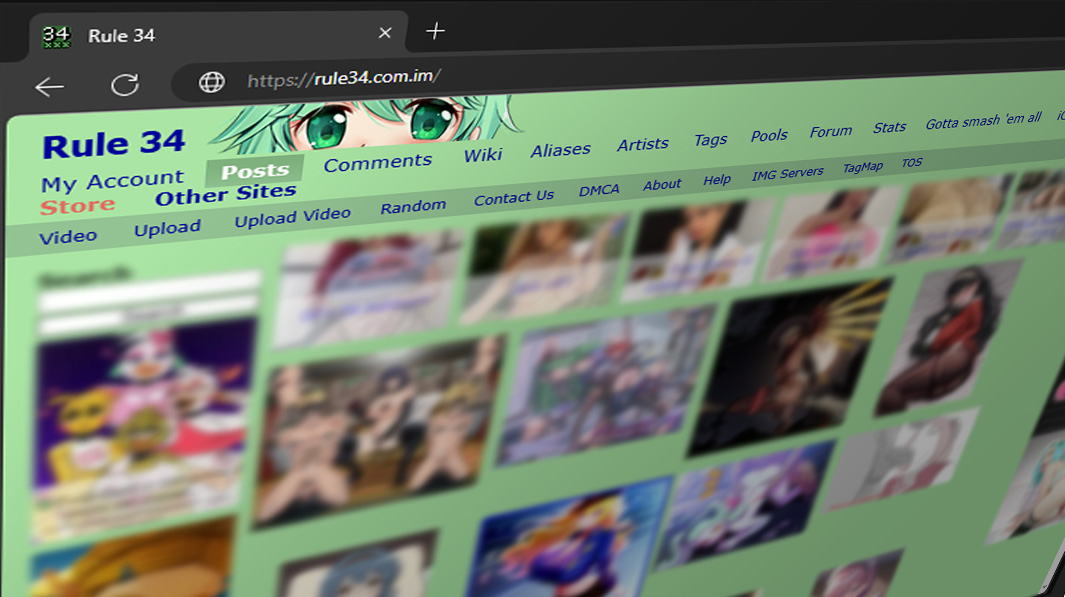
Understanding that distinction immediately clears up many common questions about Rule34 sites, apps, registration, booru platforms, safety, and the frequently searched phrase "official Rule34 site." The original concept and the websites that later adopted its name are related culturally, but they are not the same thing.
What Is Rule34?
The simplest Rule34 definition is that it is an Internet saying about the tendency for almost every recognizable subject, fictional universe, character, trend, or cultural reference to eventually inspire adult-oriented fan creations.
Rule34 began as a joke about the enormous creative reach of online communities. Over time, however, the phrase became recognizable Internet slang in its own right. Today, people may use the term when discussing Internet memes, fandom history, online art archives, anime communities, gaming culture, or websites that organize user-generated material.
That creates an important distinction. Rule34 can mean the original Internet meme, or it can refer informally to websites that adopted Rule34 terminology. Mixing those two meanings is one of the main reasons searches such as "rule34 meaning," "rule34 sites," and "what is the official Rule34 site?" often produce confusing answers.
"The easiest mistake is treating Rule34 as though it originally belonged to one company or website. It makes more sense to understand it as an Internet idea that later became associated with archives, communities, and search platforms." — Dr. Maya Reynolds, digital-culture researcher
What Does Rule34 Mean in Internet Culture?
In everyday Internet language, Rule34 works like an exaggerated observation about how quickly online communities remix popular culture. Imagine a new game character becoming famous. Fans begin making artwork, memes, animations, theories, costumes, parodies, and other reinterpretations. The Rule34 joke suggests that adult reinterpretations will eventually become part of that creative ecosystem as well.
This is why the term frequently appears around anime, manga, video games, comics, movies, television series, fictional characters, and Internet memes. The expression does not mean that every imaginable subject literally has related material. It is a deliberately exaggerated piece of Internet folklore rather than a measurable rule.
Where Did Rule34 Come From?
The most widely documented Rule34 origin dates to a webcomic published in 2003. The comic is generally credited to Peter Morley-Souter, who used the online name TangoStari. Its caption presented the idea using the wording "Rule #34," helping turn an observation about online culture into a memorable numbered phrase.
As with many early Internet memes, the history is not perfectly tidy. Similar ideas may have circulated before the comic appeared. Early message boards and fan communities were highly decentralized, and many pages from that period disappeared without being archived.
For that reason, 2003 is best understood as the most widely recognized documented point in the history of Rule34 rather than proof that nobody had expressed a similar idea earlier.
When Was Rule34 Created?
If someone asks when was Rule34 created?, 2003 is the most useful answer. The phrase later spread through forums, imageboards, meme communities, and compilations of the so-called Rules of the Internet.
Its longevity is especially interesting. Thousands of early-2000s Internet jokes disappeared when forums closed or communities moved elsewhere, yet Rule34 continued circulating and eventually became familiar even to people who had never seen the original comic.
What Is the Connection Between Rule34 and 4chan?
Rule34 is often described as a "4chan rule," but that description simplifies its history too much.
The documented webcomic associated with the phrase predates much of its later popularity on 4chan. What 4chan and similar imageboard communities did was help spread Rule34 through meme culture and collections of humorous numbered statements called the Rules of the Internet.
As users repeated and modified these lists, Rule34 became one of their most famous entries. Its strong connection with 4chan therefore comes primarily from distribution, repetition, and meme culture rather than a clearly documented origin on the platform itself.
A useful way to understand the progression is this: an Internet joke appeared, online communities repeated it, numbered Rules of the Internet lists adopted it, and large imageboard communities helped make the expression widely recognizable.
Is Rule34 an Internet Rule?
Yes, but only in a cultural sense.
There is no Internet authority maintaining Rule34, no technical organization enforcing it, and no universal rulebook that websites must follow. The Rules of the Internet were community-created jokes and observations about online behavior.
Think of them as digital folklore rather than actual regulations. Their numbering does not represent an official Internet standard.
Why Is Rule34 Connected With Anime?
Searches for Rule34 frequently overlap with anime because anime and manga communities developed some of the Internet's largest fan-art ecosystems and tag-based image archives.
Anime fandom traditionally places strong emphasis on recognizable characters, artist communities, detailed tagging, franchise classification, and visual archives. These characteristics made booru-style platforms particularly popular among anime and manga fans.
The connection is therefore partly cultural and partly technical. Rule34 is not limited to anime, but anime communities helped popularize the database structures and tagging habits that many Rule34 sites later adopted.
Rule34 vs Booru: What Is the Difference?
One of the easiest ways to understand modern Rule34 sites is to understand the term booru.
| Feature | Rule34 | Booru |
|---|---|---|
| Basic meaning | Internet meme or cultural concept | Tag-driven image archive system |
| Origin | Early Internet culture | Imageboard and gallery communities |
| Primary purpose | Describes an Internet idea | Organizes searchable media |
| Requires a website | No | Usually |
| Uses tags | Not inherently | Tagging is normally central |
| Content type | Concept can apply broadly | Depends on the individual archive |
A booru is essentially a database-oriented image gallery in which posts are categorized using descriptive tags. These tags may identify a character, franchise, artist, media type, rating, visual feature, or other searchable property.
That structure explains why many Rule34 sites feel less like conventional social networks and more like searchable databases. The main experience revolves around finding material through tags rather than scrolling through a personalized feed.
How Does Rule34 Work on Booru-Style Sites?
Most booru-style platforms follow a straightforward idea: every uploaded post receives metadata in the form of tags. Instead of relying mainly on titles or descriptions, the database uses those tags to connect related material.
A user might combine character names, franchise names, artists, file types, or ratings to narrow a search. Some platforms also support exclusions, allowing users to remove unwanted categories from search results.
This approach can become surprisingly powerful. A well-maintained archive with consistent tags can make millions of files searchable without requiring long descriptions for every post.
"A booru's real engine is not the image grid. It is the metadata. Consistent tags can turn an enormous archive into a database people can actually navigate." — Dr. Maya Reynolds
Why Do Tags Matter So Much?
Tags determine how accurately users can find what they are looking for. Good tagging connects related material and separates unrelated categories. Poor tagging creates duplicate terms, missing results, irrelevant matches, and inconsistent searches.
This is also why experienced booru users may care more about tag quality than website appearance. A visually simple platform with excellent metadata can be more useful than a modern-looking site with inconsistent classification.
Which Rule34 Alternatives Have Better Tag Systems?
There is no universal answer because the best alternative depends on what someone expects from an image database.
People interested primarily in tagging systems, anime artwork, metadata, and archive organization may encounter names such as Danbooru, Gelbooru, or Safebooru. Each platform follows its own moderation rules, tag conventions, filtering systems, and content policies.
When comparing Rule34 alternatives, it is more useful to evaluate factors such as tag accuracy, filtering controls, artist attribution, search flexibility, blacklist options, archive size, and moderation standards rather than choosing solely by popularity.
A platform with a smaller archive but cleaner tagging may produce better search results than a larger database filled with duplicate or inconsistent metadata.
What Is the Official Rule34 Site?
Strictly speaking, there is no official website for the Rule34 Internet meme itself.
This is one of the most important distinctions to understand. Rule34 existed as an Internet expression before many modern websites using that name appeared.
Several domains and archives later adopted Rule34 terminology, but using the name does not make one of those websites the creator or central authority behind the original meme.
Think of it the same way you might think about a website named after a famous meme. The domain may become popular, but owning or operating that domain does not automatically mean the site created the cultural idea behind the name.
Is Rule34 Free?
The Rule34 meme itself is simply an Internet concept. There is obviously no cost to mentioning or discussing it.
Websites using Rule34 terminology operate independently and can have different business models. Some allow visitors to browse large parts of their databases without payment, while others may use advertising, optional accounts, donations, or additional features.
Because individual platforms can change their policies, users should evaluate the specific service they are visiting rather than assuming every Rule34 site operates identically.
Does Rule34 Require an Account?
Rule34 itself cannot require an account because it is not a company or platform.
Individual websites may allow basic browsing without registration while reserving community features for registered members. Depending on the site, an account may be needed for commenting, saving preferences, maintaining filters, uploading files, voting, or managing personal settings.
Registration requirements are therefore a feature of the individual website rather than Rule34 as an Internet concept.
Does Rule34 Have Age Restrictions?
The phrase Rule34 has no age restriction because it is simply a piece of Internet terminology. Websites hosting adult material are different.
Adult-oriented archives generally restrict access to adults and may display age notices, warnings, or terms of service defining who may use the platform.
This distinction matters for educational searches. Someone can research the history of Rule34, its meaning, its relationship with 4chan, or its place in Internet culture without visiting an adult archive.
Is Rule34 Safe?
There is no universal yes-or-no answer because "Is Rule34 safe?" can mean several different things.
Someone may be asking whether the content is appropriate, whether a specific domain is technically secure, whether registering exposes personal information, or whether downloading files presents a malware risk.
The answer depends primarily on the particular site being visited. Rule34 is a cultural term, while security is a property of individual websites, advertisements, downloads, scripts, and applications.
A website that appears safe today can also change ownership, advertising providers, or technical infrastructure later. That is why users should avoid assuming permanent trustworthiness based only on a domain name or past experience.
Does Rule34 Have Viruses?
Rule34 as an idea obviously cannot contain malware. Websites and third-party services using the name are separate matters.
Like many areas of the web, users may encounter misleading advertisements, fake download buttons, suspicious redirects, deceptive browser notifications, or imitation websites.
If a page unexpectedly claims that special software, an extension, or an unfamiliar program must be installed simply to continue browsing, that should be treated cautiously.
Is Rule34 Safe to Download From?
Downloading an ordinary media file is different from installing executable software. The greatest caution should be used when a site offers unexpected programs, browser extensions, APK packages, scripts, or compressed archives from unknown sources.
A useful rule is simple: viewing an online archive should rarely require installing unrelated software.
If the goal is only to view media, there is usually little reason to install a program offered through an advertisement, redirect, pop-up, or unfamiliar download page.
Is Rule34 Safe on Mobile?
Mobile browsing presents many of the same risks as desktop browsing, although the warning signs may look different.
Smartphone users should pay particular attention to fake system alerts, unwanted browser notifications, redirects, imitation app stores, and requests to install unofficial applications.
On Android devices, APK installation deserves extra caution because a website can attempt to convince users to install software outside the normal app marketplace. On iPhones, suspicious configuration profiles, calendar subscriptions, or notification requests can serve similar deceptive purposes.
So when someone asks is Rule34 safe on mobile?, the answer depends more on the exact website and user behavior than on the Rule34 name itself.
What Is a Rule34 App?
There is no single official Rule34 application connected to the original meme.
Independent developers have created mobile applications, browser tools, progressive web apps, and booru viewers that use Rule34 terminology or connect to related archives.
Because these projects are independent, users should check who developed an app, where it is distributed, what permissions it requests, how recently it has been maintained, and whether the download source is trustworthy.
An application using "Rule34" in its name should not automatically be assumed to represent the entire Rule34 ecosystem.
How to Use Rule34 Sites More Safely
For adults who choose to browse booru-style archives, safer browsing mostly comes down to ordinary Internet security habits.
- Check the exact domain. Similar names can belong to unrelated websites or imitation services.
- Keep browser protection enabled. Do not disable security warnings simply because a webpage requests it.
- Avoid unnecessary software. Be cautious when a site asks you to install extensions, applications, or unfamiliar files.
- Use filters when available. Tag blacklists and content filters can make large archives easier to control.
- Use a unique password. If you create an optional account, avoid reusing credentials from important services.
The central idea is not complicated: security decisions should be based on the exact domain, download, permission request, and account information involved rather than the category name alone.
"People often ask whether an entire class of websites is safe, but practical security decisions happen one domain, one download, and one permission request at a time." — Dr. Maya Reynolds
Why Is Rule34 Mentioned on Twitter or X?
Rule34 moved beyond early imageboards many years ago. Today, people may mention it on X, Reddit, forums, Discord communities, gaming discussions, or meme pages as shorthand for a familiar part of Internet fandom culture.
A mention of Rule34 does not automatically mean that the surrounding post contains adult material. Someone may simply be talking about Internet history, explaining the meme, joking about fandom behavior, or discussing online culture.
Context therefore matters. The term has become recognizable enough that it can function as a cultural reference even when no Rule34 material is being shown.
What Happened to Rule34?
Nothing happened to Rule34 in the sense that the concept disappeared. The phrase simply evolved from a niche Internet joke into long-lasting digital slang.
What changed was the Internet around it.
Early Rule34 culture developed during an era dominated by small forums, IRC channels, personal websites, imageboards, and decentralized fan communities. Modern users encounter the phrase through social networks, algorithmic feeds, searchable archives, messaging platforms, and large fandom databases.
Individual Rule34 websites may also change domains, redesign their interfaces, adjust moderation rules, or disappear entirely. As a result, searches such as "what happened to Rule34?" sometimes refer to one particular website rather than the broader Internet concept.
Why Has Rule34 Survived for So Long?
Rule34 is an excellent example of how Internet folklore develops.
The phrase followed a familiar pattern: a small joke became recognizable within a community, users repeated it, meme culture amplified it, and eventually the expression became understandable even without its original context.
That final stage is important. Once people no longer need to see the original comic to understand the joke, the phrase has effectively become part of Internet vocabulary.
Rule34 survived because its concept was simple, memorable, easy to remix, and applicable to constantly changing fandoms. Every new movie, game, anime series, meme, or fictional character gave people another opportunity to repeat the expression.
Rule34 History and the Evolution of Internet Culture
The broader history of Rule34 tells us something interesting about how online culture works.
The Internet rarely preserves memes in their original form. Communities copy them, shorten them, change their context, attach them to new platforms, and eventually forget where they came from.
Rule34 followed that process almost perfectly. What began as an early Internet joke became associated with Rules of the Internet lists, imageboards, anime culture, booru archives, social media, and eventually mainstream discussions about digital fandom.
Its meaning remained recognizable even while the platforms surrounding it changed dramatically.
Conclusion
Rule34 is best understood as a long-running Internet meme rather than a single website, application, or organization. Its widely recognized history reaches back to the early 2000s, while communities such as 4chan later helped spread the phrase through the broader Rules of the Internet culture.
Modern Rule34 sites often use booru-style databases built around detailed tagging, search filters, ratings, and community-generated metadata. Because these services are independent, their account requirements, age restrictions, privacy practices, security standards, and features can differ considerably.
If you encounter Rule34 online, remember the most useful distinction: the meme, the websites, and the applications are not the same thing. Understanding that difference makes it much easier to interpret Rule34 history, evaluate individual platforms, and avoid misleading claims about an "official" service.
Frequently Asked Questions About Rule34
What is Rule34?
Rule34 is an Internet meme suggesting that almost any recognizable subject can eventually inspire adult-themed fan creations online. The phrase developed within early Internet culture and later became strongly associated with fandoms, imageboards, and booru-style archives.
Where did Rule34 come from?
The most widely recognized documented origin is a 2003 webcomic associated with Peter Morley-Souter, also known as TangoStari. Similar ideas may have circulated earlier, but the comic helped establish the famous numbered Rule34 formulation.
Is Rule34 a 4chan rule?
Rule34 became strongly associated with 4chan because the platform helped spread the Rules of the Internet meme culture. However, its documented webcomic origin predates much of that later popularity, so 4chan is better understood as an important distribution point rather than its sole creator.
Is there an official Rule34 website?
No single website can accurately be described as the official home of the original Rule34 meme. Multiple independent websites use the name, but the cultural expression existed before those modern platforms.
Does Rule34 require an account?
The Rule34 concept does not require registration. Individual websites may allow anonymous browsing while requiring an account for uploads, comments, voting, preferences, saved searches, or filtering features.
Does Rule34 have age restrictions?
The phrase itself has no age restriction, but websites hosting adult-oriented material generally restrict their services to adults. Requirements vary by platform and location.
Is Rule34 safe?
Safety depends on the specific website rather than the Rule34 name itself. Users should verify domains, avoid suspicious downloads, keep browser protections enabled, use unique passwords, and be cautious with unexpected installation prompts or notification requests.